
Can art change the way we live?
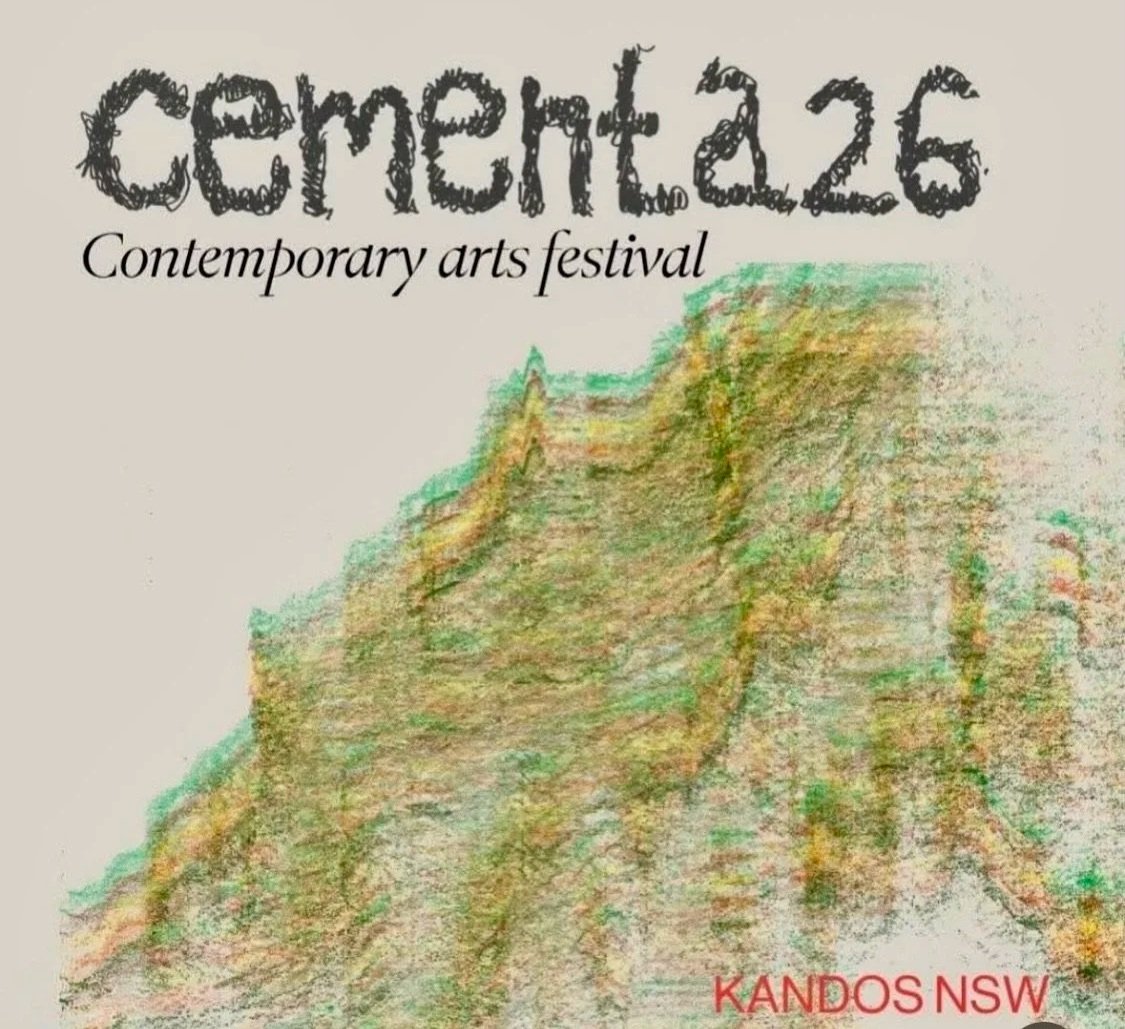
After three days at Cementa festival in Kandos, (found in NSW’s central west), I’d say yes. And possibly the way we design our bathrooms too.
For the uninitiated, Cementa is not your usual art festival. There are no intimidating white galleries, no requirement to speak art language and certainly no need to stand thoughtfully in front of a canvas while pretending you know your post-minimalism from your neo-something-or-other.
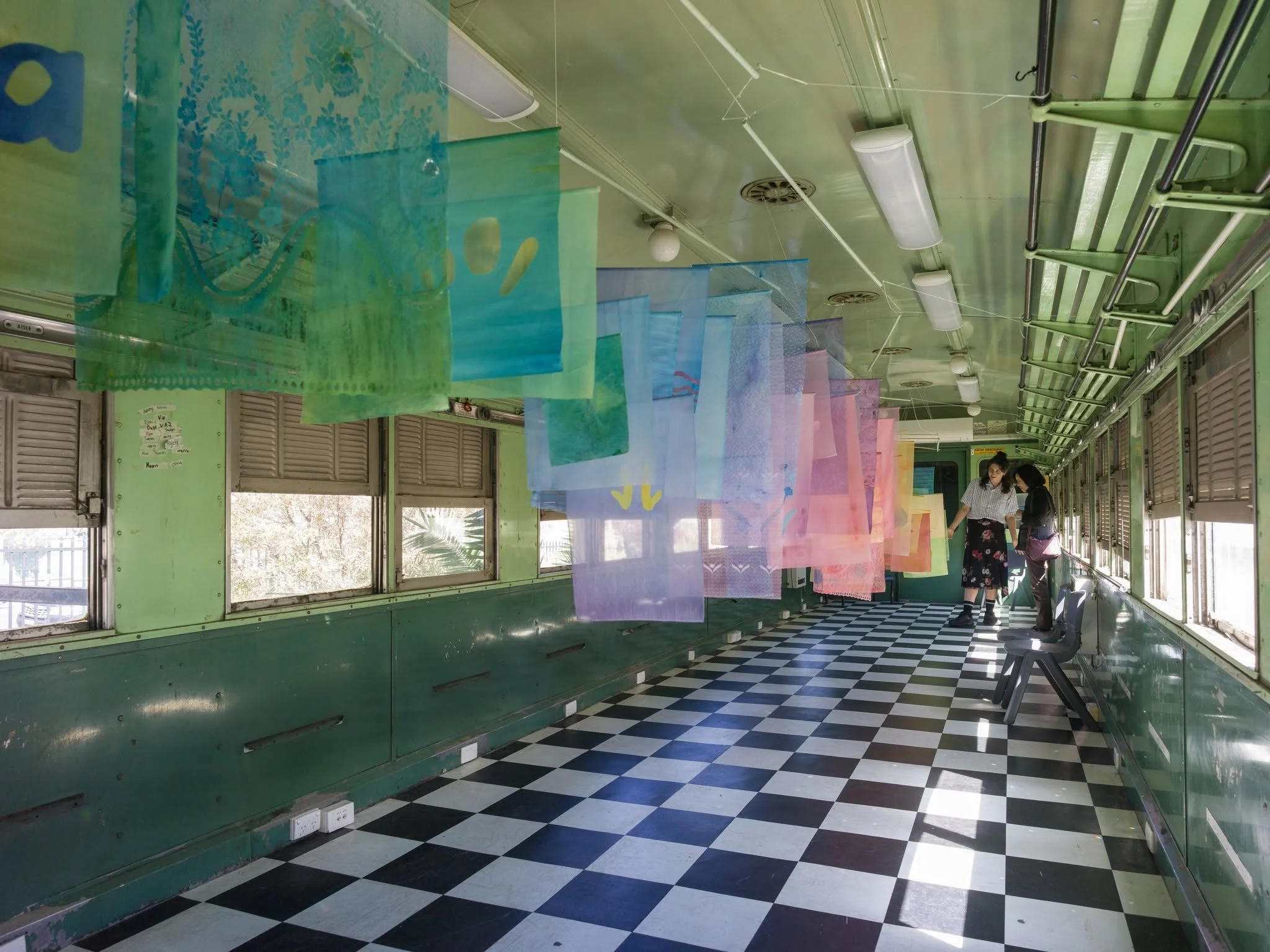
Instead, Kandos becomes the gallery. Art pops up in old buildings, streets, shopfronts, garages, paddocks and unexpected corners. There are performances, installations, sound works, gatherings, conversations and all manner of things that challenge the idea of what we traditionally call art.
And then there was the Turdis.
Now, before you assume this was simply a glorified portaloo with an fab name, it was actually an educational installation designed to introduce visitors to composting toilets and get us thinking differently about one of the most basic functions of human life.
Naturally, I made visiting the Turdis part of my morning ritual.
And, I have to say, I was pleasantly surprised.
It was simple, effective and, wait for it, sweet smelling. Which got me thinking. How often do we dismiss an idea because it challenges what we consider normal, when actually it might be a better way of doing things? That, to me, is where art gets really interesting.
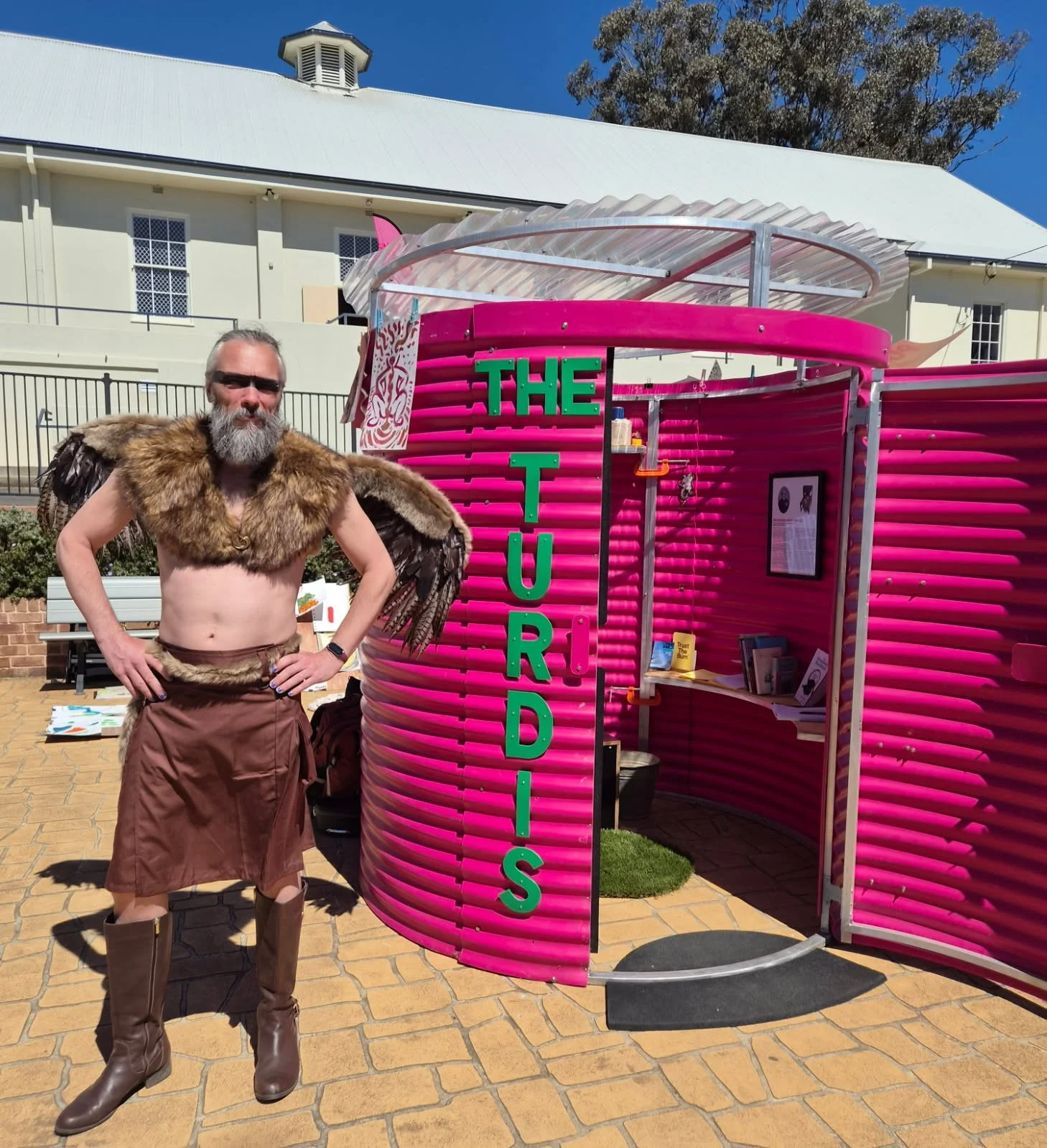
Much of the work at Cementa isn’t something you simply look at. It asks you to participate, question, listen, walk, interact or reconsider. And sometimes it takes something as ordinary as a toilet and turns it into an opportunity to learn about real sustainability.
It also reminded me that art doesn’t have to be precious. It doesn’t have to be a painting destined to hang above the sofa, perfectly centred and colour matched to the cushions, (though I believe there is a place for this and I’ve had many debates around this type of art appreciation with artist friends).
In fact, most of the art at Cementa isn’t paintings at all.
And I loved that. Instead, the town of Kandos becomes the gallery. Old buildings, streets, industrial spaces and the landscape itself become part of the experience. You might stumble across an artwork, follow a sound, join a conversation or find yourself standing alongside a bunch of strangers discussing something you never expected to be discussing at an arts festival.
A composting toilet, for example.
Cementa is also deeply connected to its community, and for four days those boundaries between artist, audience, local and visitor become wonderfully blurry. It is art that gets people out of their houses, into the streets and talking to each other.
And isn’t that what we want our homes to do too?
Somewhere along the way, we seem to have decided that interiors are primarily about making things look good. And yes, I am an interior stylist, so obviously I am very happy to talk about beautiful things. But I’m much more interested in how a space makes you live. A dining table that keeps everyone sitting around long after dinner has finished. A kitchen bench that becomes the gathering point rather than a barrier. A chair positioned in exactly the right spot to catch the afternoon sun. A ridiculous object that makes you smile every time you walk past it.
These things might not be traditional art, but they can change the way we experience our homes. And this is where I think art and interiors collide. I’d much rather walk into a home filled with things that tell me something about the people who live there than one that looks like it has been delivered in a box labelled ‘Perfectly Curated Neutral Home No. 47’.
Give me the weird vase. The painting you bought because it made you laugh. The chair you inherited from your nana. The object you found at a roadside stall. The artwork that clashes spectacularly with your curtains but somehow makes the whole room sing.
Because good interiors aren’t about getting everything to match. They’re about creating an environment that makes you feel something.
Cementa reminded me that art can be playful, practical, social, beautiful, confronting, funny or completely bonkers. It can make you stop. It can make you learn something. It can make you talk to a stranger. It can make you notice a building or a landscape you’ve walked past a hundred times.
And perhaps that is exactly what we need more of in our homes. Not more stuff. More meaning.
So the next time you’re choosing something for your walls, don’t just ask whether it matches the sofa. Ask whether you love it. Does it make you laugh? Does it remind you of somewhere? Does it start a conversation? Does it make you stop for half a second when you walk past?
And if the answer is yes, bring it home. Hang it. Put it on the floor. Put it on the ceiling. Put it in the garden.
Or perhaps, if Cementa has taught me anything, we should occasionally be prepared to rethink even the things we take completely for granted. Including where we do our morning business. Because art doesn’t always need to sit quietly on a wall.
Sometimes it can teach us something, make us laugh, challenge what we thought we knew, and, apparently, even make the humble composting toilet seem rather sweet.
If you’d like to know more about Cementa Festival or the Turdis, below are some helpful links. I hope to see some of you out in Kandos for Cementa 2028!
Cementa Website: cementa.com.au for dates, art stuff + past Cementa festivals
The Turdis: pootopia.art - + shout out to artists Dr Kim + Dr Lucas